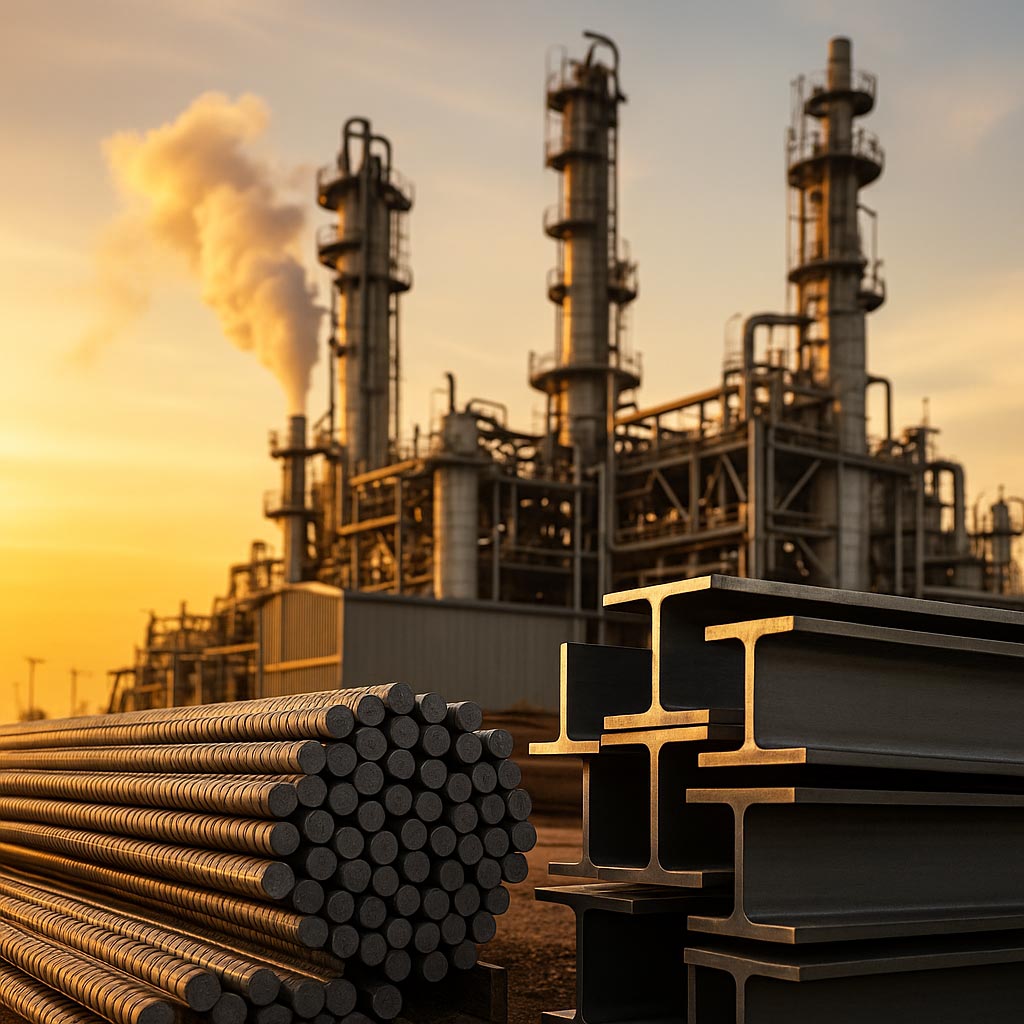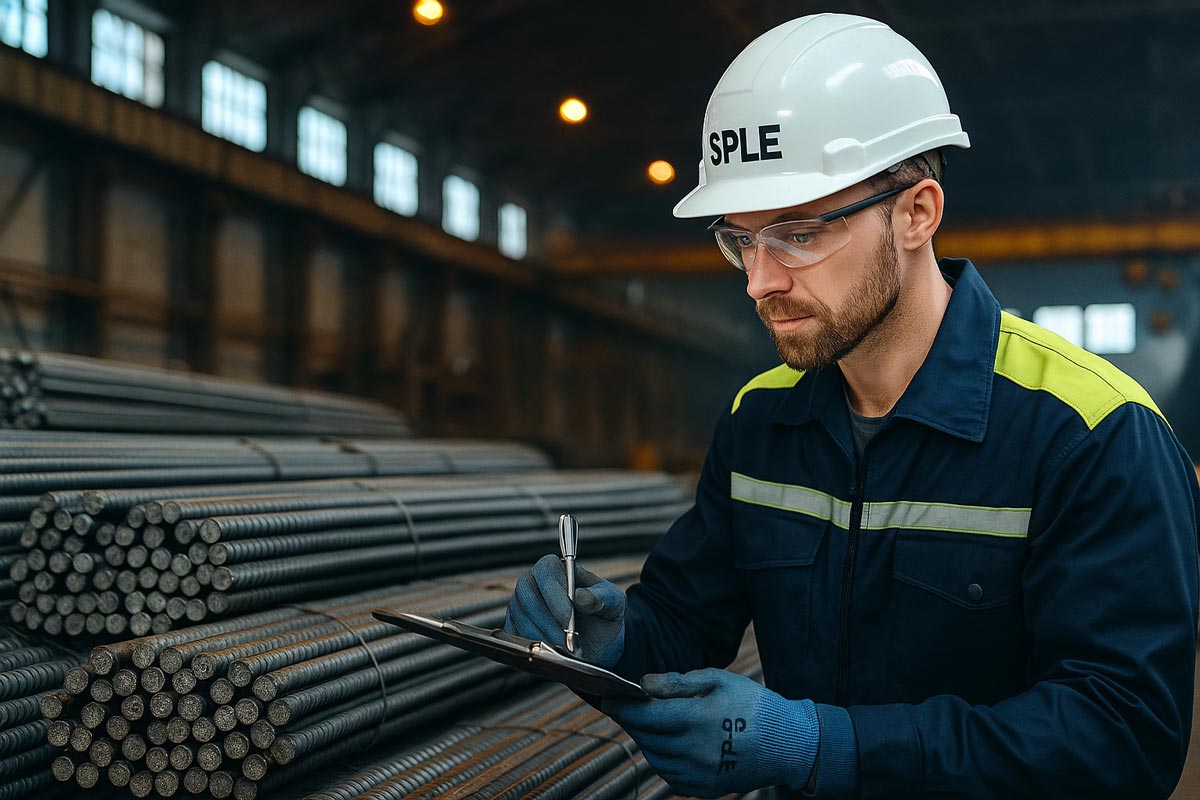
Quality control in the steel industry, especially in the production of rebar and beams, is one of the most essential pillars for ensuring the safety and durability of structures. These products, as the main elements of building frameworks, bridges, dams, and other infrastructure projects, must meet the highest mechanical, chemical, and dimensional quality standards. Below, we review the processes, standards, and importance of quality control in this sector.
- The Necessity of Quality Control in Rebar and Beam Production
Rebar and beams are directly tied to building safety and service life. Even the smallest defect in production can reduce structural strength and cause irreparable damage. The importance of quality control can be summarized in several main aspects:
- Structural safety: Low quality can lead to structural failure under earthquakes or heavy loads.
- Long-term durability: Poor-quality steel is more susceptible to corrosion, reducing project lifespan.
- Cost reduction: High-quality products minimize future repairs and reconstructions.
- Market trust: Adhering to standards ultimately increases the producer’s credibility.
- Quality Control Processes in Rebar Production
- a) Raw Material Control
Raw materials such as iron ore and steel scrap must be analyzed chemically. Impurities like phosphorus and sulfur negatively affect final steel properties.
- b) In-Process Control
At various production stages, sampling and testing are conducted:
- Melt chemical analysis: Before casting, the molten steel’s chemical composition is checked with spectrometers.
- Temperature control: Rolling temperature is crucial. Deviations can cause brittleness or reduced strength.
- c) Mechanical Tests
Rebars undergo several tests:
- Tensile test: To measure yield and ultimate strength.
- Bending and rebending test: To assess ductility and flexibility.
- Impact test: To evaluate resistance against sudden loads.
- Quality Control Processes in Beam Production
Beams, due to their key role in carrying heavy loads, require stricter controls.
- a) Dimensional Control
Beam dimensions, including height, flange width, and web thickness, must comply precisely with standards. Even small deviations can cause improper force distribution.
- b) Weld and Seam Control
For certain beam types, welds and seams are inspected to prevent micro-cracks.
- c) Non-Destructive Testing (NDT)
- Ultrasonic Testing (UT): To detect cracks and internal voids.
- Industrial Radiography: To check structural homogeneity.
- Quality Standards for Rebar and Beams
Different organizations have developed standards for steel quality control, including:
- Iran National Standards (ISIRI): Covers specifications for rebar (A2, A3, A4) and beams (IPE, INP).
- European Standards (EN): Includes EN 10080 (rebar) and EN 10034 (beams).
- American Standards (ASTM): Includes ASTM A615 (rebar) and ASTM A36 (beams).
- Russian Standards (GOST): Widely used across Asia and CIS countries.
- Impact of Quality on Building Safety
Quality control directly ensures building safety:
- Earthquake resistance: Structures built with standard rebars and beams are more resilient to lateral seismic forces.
- Corrosion resistance: Steel with anti-rust coating or optimized composition prolongs structure life.
- Reduced collapse risk: Precise quality control minimizes sudden structural failures.
- Modern Technologies in Quality Control
Today, steel producers rely on advanced technologies:
- Artificial Intelligence (AI): Predicting and detecting defects in production.
- Automation and robotics: Reducing human errors in inspections.
- Online Monitoring Systems: Continuous control of dimensions and chemistry in real-time.
- Nano-coatings: Improving resistance of rebar and beams against corrosion.
- Future of Quality Control in the Steel Industry
As demand grows for safer and more sustainable structures, the future of quality control includes:
- Integration with IoT: Real-time monitoring across production lines.
- Stricter standards: Especially in earthquake-prone regions.
- Digital quality reporting: Enhancing transparency in supply chains.
- Focus on environmental sustainability: Minimizing waste and adopting green methods.
Conclusion
Quality control in rebar and beam production is not just an industrial requirement but a necessity for safeguarding lives and assets. Advanced technologies, strict adherence to standards, and continuous monitoring ensure a safer and more sustainable future for the construction industry.
If you are looking for high-quality steel products and professional services, contact us at Sperloos Energy.
about
sperloos energy
We create value through quality products and reliable trade.