Introduction
The mining industry, as one of the fundamental pillars of the global economy, has always played a decisive role in providing raw materials for various industries. With the growing global demand for minerals and increasing environmental and safety pressures, mining companies have turned toward adopting modern technologies. Today, mines are no longer just extraction sites; they have transformed into complex centers of automation, artificial intelligence, the Internet of Things, and sustainable solutions.
This article explores new technologies in mining processes, focusing on automation, AI, safety, and environmental sustainability, while providing real-world examples from leading global mines.
- Automation in Mining
One of the most significant transformations in the mining industry is the adoption of automated machinery and equipment. Automation increases speed, reduces costs, and improves safety.
1-1. Autonomous Haul Trucks
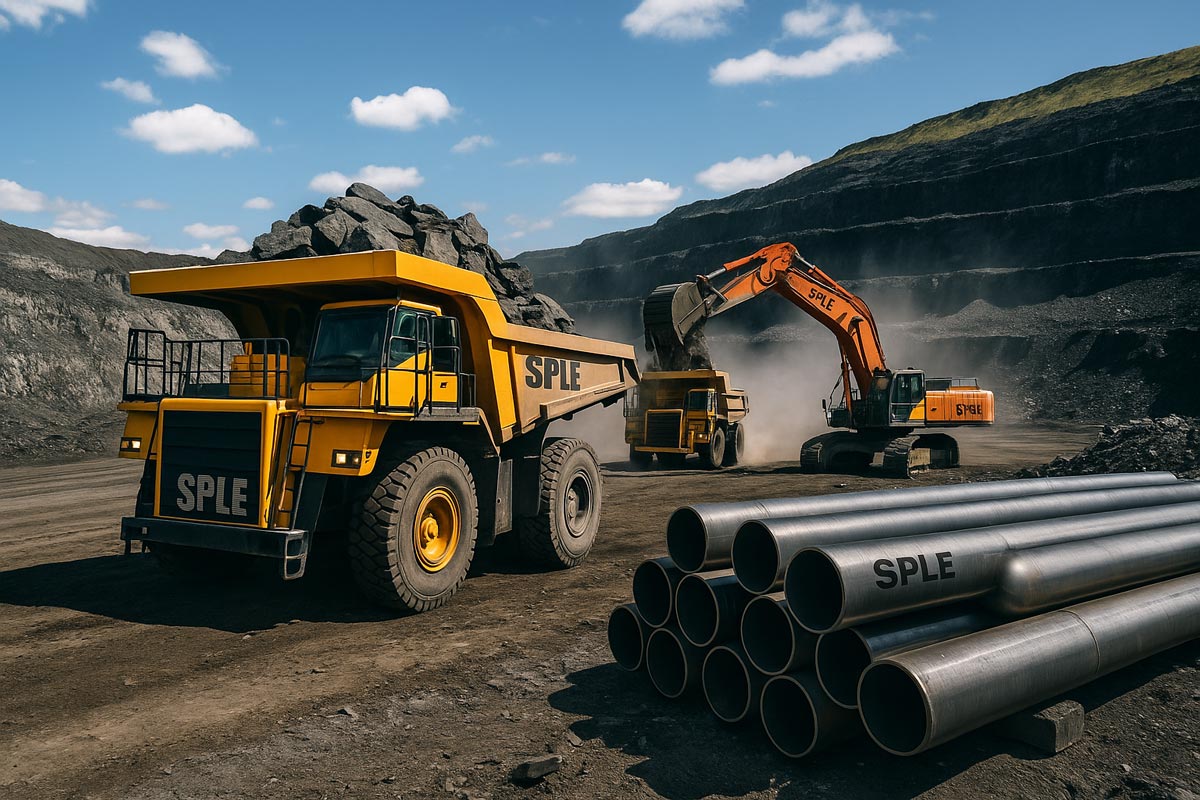
- Rio Tinto in Australia is a pioneer in using autonomous haul trucks, which operate without drivers using GPS and radar systems.
- These trucks have reduced fuel consumption and minimized accidents caused by human error.
1-2. Automated Drilling and Loading
- Autonomous drills can identify drilling points with high precision.
- BHP Billiton employs these machines in its iron ore mines, leading to a remarkable increase in productivity.
- Artificial Intelligence and Data Analytics
AI is rapidly expanding in mining. Massive data collected from sensors and equipment is analyzed using AI algorithms, enabling optimized decision-making.
2-1. Predictive Maintenance
- AI predicts equipment failures before they occur.
- This reduces unplanned downtime and lowers maintenance costs.
2-2. Optimized Mining Operations
- Machine learning algorithms suggest the best transport routes, drilling amounts, and even optimal blasting points.
- Vale in Brazil has improved nickel mine efficiency through AI-powered optimization.
- Enhancing Safety in Mines
Safety has always been a challenge in mining. New technologies are being used to reduce risks and protect workers’ lives.
3-1. Drones
- Drones are used for mapping, monitoring environmental conditions, and identifying hazardous zones.
- In African gold mines, drones help detect potential slope failures.
3-2. Real-Time Monitoring Systems
- Wearable sensors track workers’ vital signs such as heart rate, oxygen levels, and body temperature.
- Gas sensors detect methane leaks and other toxic gases.
3-3. Rescue Robots
- Remote-controlled robots enter hazardous areas for search and rescue.
- Coal mines in China are already using such robots.
- Environmental Sustainability
International pressure and strict environmental laws have driven mining companies toward greener solutions.
4-1. Waste and Water Management
- Water recycling systems reduce natural resource consumption.
- Chilean copper mines use desalination and recycling technologies to combat water scarcity.
4-2. Reducing Carbon Emissions
- Electric-powered machinery is replacing diesel equipment to cut greenhouse gas emissions.
- Anglo American is developing hydrogen-powered mining trucks.
4-3. Land Rehabilitation
- After mining operations, lands are rehabilitated through reforestation and restoring vegetation.
- In Canada, nickel mines are followed by reforestation and wetland restoration projects.
- Internet of Things (IoT) in Mining
IoT connects equipment and enables real-time data collection.
- Sensors installed on machinery record vibration, temperature, and pressure.
- Data is transmitted via wireless networks and analyzed using AI.
- Example: Newmont Mining employs IoT for monitoring equipment in its gold mines.
- Blockchain and Supply Chain Transparency
Blockchain brings transparency to mining supply chains.
- Customers can ensure that minerals are sourced legally and without forced labor.
- De Beers uses blockchain to track diamonds from mine to market.
- Robotics and Advanced Automation
Beyond haul trucks and drills, specialized robots are used for sampling, deep drilling, and controlled blasting.
- Underground mining robots can operate in confined and dangerous spaces.
- Example: Poland uses robotic technology in coal mines to enhance underground safety.
- Virtual Reality (VR) and Augmented Reality (AR)
- VR is widely used for safety training, simulating hazardous mining environments.
- AR assists technicians with live instructions during equipment repairs using smart glasses.
Conclusion
The integration of innovative technologies has transformed mining into a smarter, safer, and more sustainable industry. Adoption of automation, AI, IoT, blockchain, and robotics not only boosts productivity but also enhances worker safety and environmental protection.
Leading companies such as Rio Tinto, BHP, Vale, Anglo American, and De Beers showcase how digital transformation is shaping the future of mining. The future points toward further digitalization, lower environmental impact, and full supply chain transparency.
Call to Action
Sperloos Energy, as a key player in the steel and energy sector, is ready to provide consulting and cooperation in the supply and export of mining and industrial products. For more information and expert advice, contact us today.
about
sperloos energy
We create value through quality products and reliable trade.